The ways we live, commute, and consume are changing, and products are beginning to keep pace with these transformations. Smaller homes are making room for more compact, multifunctional appliances. New forms of mobility are expanding our travel options. In interior spaces, materials, colors, and objects are taking on new functions, helping to make environments increasingly personal.
By 2027, some of these trends are expected to gain significant momentum. Technology will be more integrated into daily life though not always in obvious ways. It might appear as a feature that simplifies a task, a product offering multiple uses, or a platform that makes finding the right solution easier. Price, efficiency, durability, and practicality remain key factors in purchasing decisions.
These changes are also reaching the manufacturing and retail sectors. With trends emerging and spreading faster than ever, product development requires a closer watch on consumer behavior. At the point of sale, customer experience is becoming increasingly important, as is the ability to demonstrate how different products can combine to form a single solution.
It is a scenario where the boundaries between categories are becoming blurred. Home appliances are beginning to harmonize with home architecture, technology is integrating into vehicles and services, and décor items are adapting to new ways of inhabiting spaces. At the same time, features once considered secondary such as personalization and designs are now sharing the stage with fundamental attributes like price and functionality.
To understand what might gain traction by 2027, Eletrolar News Magazine spoke with companies that are closely monitoring these shifts. In the following pages, executives from the consumer electronics, mobility, and interior design sectors share their insights and discuss how these trends are beginning to manifest in products, spaces, and on the streets.
MORE FUNCTIONS, LESS SPACE
By 2027, smaller, more versatile appliances capable of performing multiple functions are expected to gain ground. The combination of shrinking living spaces, a desire for convenience, and the need to control expenses are beginning to reshape both the products themselves and the attributes consumers value.
At Praxis, this shift is evident in the company’s focus on ultra-compact appliances. Denis Fornari, the company’s national sales and marketing manager, sees an opportunity that the industry has yet to fully explore: “Apartments are getting smaller. The industry hasn’t realized this yet.”
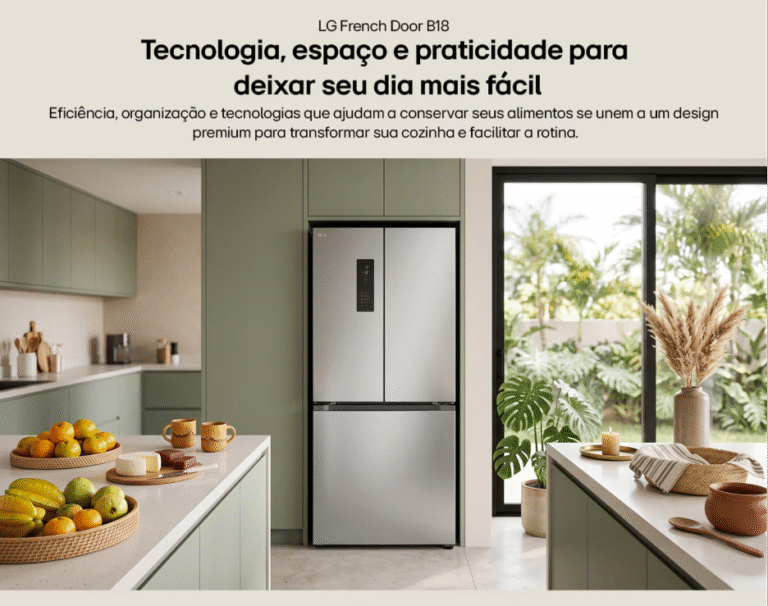
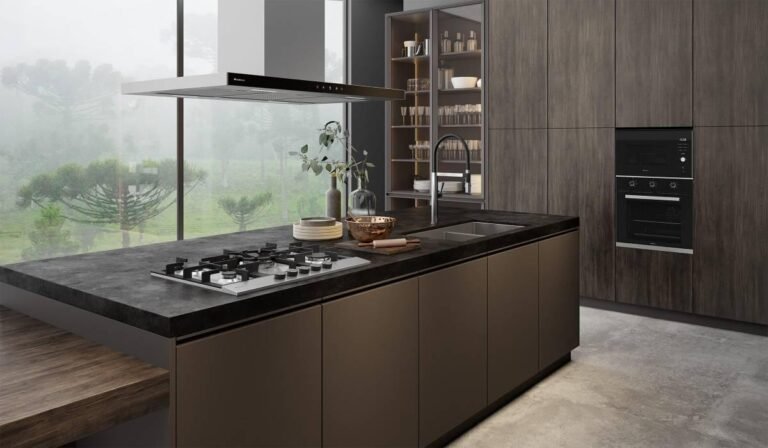
The trend isn’t just about reducing size, but about making better use of every centimeter. Karin Fischer, Commercial and Marketing Director at Fischer, points to multifunctionality as a key direction for 2027. The company has already integrated air-frying capabilities into its built-in ovens and is working on features such as gesture control for range hoods and artificial intelligence applications for air fryers.
This quest for greater versatility is also expected to influence aesthetics. Fornari views customization and color as ways to differentiate products in a market that is increasingly resembling a commodity sector. “It’s about doing more with less not just following a market leader but forging a unique identity with the consumer.”
With open-concept kitchens and appliances increasingly on display, home appliances are becoming an integral part of the home’s interior design. For Fischer, durability, multifunctionality, and design will carry more weight in purchasing decisions. “Appliances have become part of the architecture.”
Energy efficiency is also expected to evolve beyond a mere technical specification. For Fischer, this attribute is coming to represent both daily cost savings and sustainability. Fornari observes the same trend, linking the demand for more economical products to climate change and the need to reduce consumption.
As products become more compact and multifunctional, development processes must also keep pace with shorter trend cycles. Praxis has shifted to quarterly product launches and increased investment in ventilation, climate control, and laundry appliances. At Fischer, maintaining close ties with consumers and retailers is a key part of this proactive approach.
Looking ahead to 2027, Fornari also foresees a shift in the shopping experience, characterized by the integration of physical stores and e-commerce, as well as greater use of the point of sale as a space for product demonstrations.
Karin envisions a similar evolution, but from the perspective of solutions: “It is no longer enough to think in terms of isolated categories. We need to understand how people live, cook, and organize their spaces, and what problems they want to solve.”
HOMES GAIN PERSONALITY
“Personalization” is set to be a key buzzword in the interior design market in 2027. For Gian Franccesco Cominatto, founder and CEO of AMAR Granitos and GIFATTO, this shift is evident in the relationship between consumers, architects, and the living spaces themselves. “The main change is that the home has become a living ecosystem. Work, socializing, leisure, well-being, and technology all take place in the same space.”
When it comes to tabletop products, the quest for identity is accompanied by practical considerations. Daniela Poffo, Marketing and Retail Manager at Copa&Cia, highlights dinnerware, placemats, glassware, cutlery, and napkins as categories with the highest growth potential.
“They form the foundation of both daily life and special occasions items that are always essential and drive sales turnover throughout the year,” she states. This trend also extends to serving platters, dessert stands, and other multifunctional products.
Cominatto observes a similar trend in material specification. Natural stone characteristics which were long treated as variations to be corrected are now becoming integral to the design itself. “Veining, crystals, tonal variations, and geological features once viewed as ‘imperfections’ are now perceived as marks of exclusivity.”
Furthermore, design inspirations are reaching the point of sale faster than ever. According to Daniela, architects, designers, and social media have shortened the gap between inspiration and purchase. A composition shared on social media can generate demand within hours, underscoring the importance of product availability and immediate delivery. At the same time, she views curation as a way to filter the sheer volume of trends. “Not everything that goes viral has lasting sales potential.”
For Cominatto, artificial intelligence and data are expected to enhance personalization capabilities, while the uniqueness of natural materials will likely become even more significant. “The more digital and industrialized the world becomes, the greater the value placed on things that are natural, unique, and impossible to replicate.”
This combination also opens opportunities to compete on factors other than price. Daniela points to original design, agility, and close relationships as advantages of the domestic industry. Cominatto focuses on another front: transforming Brazilian stone into design products that embody their origins. “This allows Brazil to move beyond competing solely on price and start competing on authenticity, design, and exclusivity.”
MOBILITY DIVERSIFICATION
By 2027, the transformation of mobility will lie not only in the vehicles hitting the streets but also in how the supply chain organizes itself to serve them. As electric bicycles and scooters reach new audiences and use cases, the automotive aftermarket is preparing to handle an aging fleet, a wider range of models, and growing demand for information and product availability.
According to Thiago Clemente, National Aftermarket Manager at Rainha das Sete, this scenario is expected to accelerate the digital integration of distribution. The average age of Brazilian cars and trucks now exceeds ten years, while the entry of new brands particularly from China is multiplying the number of models, versions, and SKUs. In this environment, he notes, the consolidation of platforms that integrate catalogs, inventory, and logistics is gaining momentum.
This shift affects the entire supply chain. For manufacturers, integration can help reduce stockouts and slow-moving inventory; distributors and retailers can expand their digital presence and customer acquisition capabilities; and repair shops can locate parts with greater autonomy. “In a market driven by an aging fleet and increasingly diverse SKUs, this digital integration is no longer just a competitive advantage it has become an essential requirement,” Clemente states.
Digitalization also keeps pace with changing purchasing behaviors. Research regarding price, compatibility, and availability now takes place online prior to the final decision, heightening the importance of up-to-date catalogs and digital channels. Rainha das Sete’s strategy encompasses desktop platforms, mobile apps, and websites, alongside a presence on online marketplaces.
In the realm of micromobility, the transformation is unfolding on a different front: market expansion. For Daniel Fitaroni, Marketing Director at LAF, 2027 is set to be defined by the diversification of electric vehicles and the segment’s reach into increasingly varied demographics. “We used to say micromobility was the future; today, it is the present.”
According to the executive, young adults, teenagers, and older individuals are already part of this market, while some families have moved from owning one electric vehicle to two or three. An increasing street presence also helps with lower resistance among consumers who were previously unfamiliar with the products.
The next phase focuses on technology and new use cases. LAF is preparing a scooter featuring CarPlay and Android Auto, allowing users to run Waze without relying on conventional smartphone mounts. Tracking capabilities, AI-driven safety features, faster chargers, and improved water resistance are also among the developments mentioned by Fitaroni.