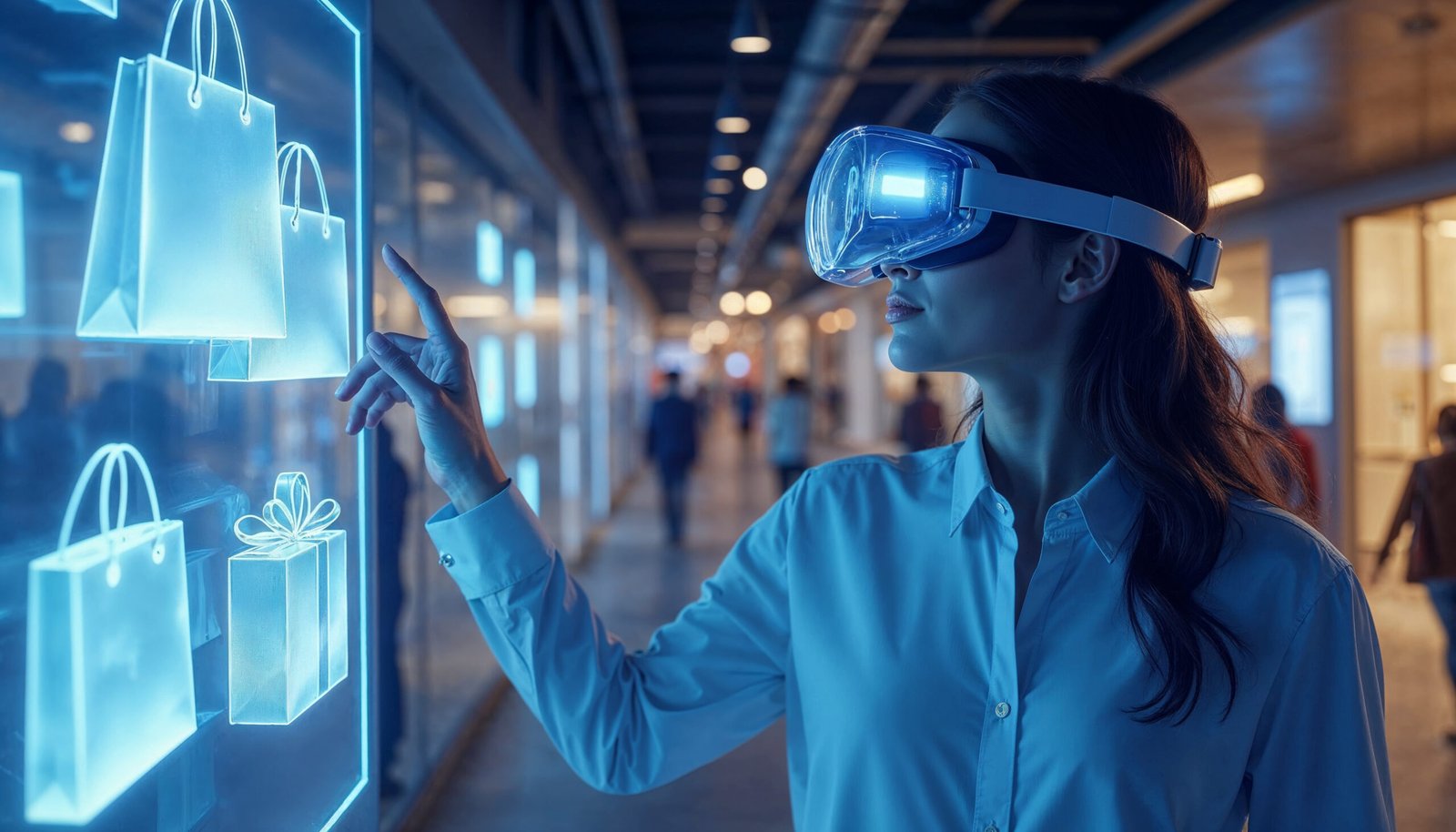
Recent months have been marked by discussions regarding retail crises driven by various factors, such as economic uncertainty and the indebtedness of Brazilian households. Market challenges have forced the retail sector to reinvent itself not merely to survive, but to grow.
The retailers that emerge from this phase won’t necessarily be the largest, but rather those best prepared to grow in a different way. Efficiency, financial discipline, consumer insight, channel integration, and technology have moved beyond being mere options; they now define a company’s ability to weather periods of pressure and prepare for the future. It is against the backdrop of these changes that the retail landscape of 2030 is taking shape.
“All of this has taught us to evaluate every business category, and project based on the return on capital employed, rather than just revenue. We began managing consumer credit with the rigor of a financial institution and handling appliance and furniture inventory with a focus on turnover and stockouts. I believe the sector is emerging stronger from this phase because it has learned to distinguish between growth that creates value and growth that merely consumes capital a distinction that will remain valid even when interest rates fall,” says Marcelo Forma, Head of Retail and Vice President at Bemol.
Gilmar Alves de Oliveira, CEO of Grupo Gazin, notes that this pressure taught them that resilience isn’t built in moments of urgency; it stems from a solid foundation: a strong organizational culture, engaged employees, mature governance, and a robust cash position. “Companies that invested in these areas over the last few years are emerging from this period better prepared and stronger not just to survive tight margins, but to achieve efficient, continuous growth moving forward.”
Therefore, the retail sector as a whole needs to adopt a mindset of sustainable growth, rather than growth at any cost. At least, that is the view of Ricardo Dinelli, CEO of Leroy Merlin Brazil. He notes that, because this sector is among the first to be affected by any event, the pursuit of growth at any cost could create major problems in the medium and long term.
In this context, operational efficiency and channel integration have shifted from being mere differentiators to becoming fundamental prerequisites for business sustainability, structured growth, and efficiency. A key adaptation involves gaining a deeper and broader understanding of the consumer journey optimizing inventory, improving logistics, and ensuring that every investment yields a real, sustainable return.
The challenge now is to transform the lessons learned during this period into a new approach to retail one that is more efficient, integrated, and prepared for the changes that lie ahead.
THE PHYSICAL STORE OF THE FUTURE
“Experience” is the keyword for the executives interviewed. For Forma, the physical store will continue to exist, but with a different function. “It ceases to be merely the place where inventory meets the consumer and becomes a space for experience, customer service, specialized services, and relationship-building,” he assesses.
According to the executive, technology and Artificial Intelligence will be decisive in this format, always serving the customer. The store of 2030 recognizes the customer the moment they arrive. Relationship history, insights, and recommendations will be right at the staff’s fingertips, ensuring every interaction is personal and frictionless. The goal is not to automate contact, but to enhance it: providing the team with the right information to deliver the best experience to every customer.
At Leroy Merlin, the term “store of the future” is no longer used; instead, there is a strategic project focused on the “business of the future,” with clear directions: the physical store in 2030 will function as a true hub for experiences, relationship-building, and specialized consulting. It will move beyond being just a large point of transaction and self-service to become a space where customers go for inspiration, to visualize real-life settings, get technical questions answered, and plan complex projects with human support.
“What we are structuring now is the exact format of this hub: its ideal size, the specific services to be offered, and even the feasibility of integrating partner brands to complement the experience. At the same time, for companies, stores can take on a central logistical role, acting as advanced mini-distribution centers. This will ensure maximum agility in local deliveries of heavy and bulky materials, as well as efficiency in convenience services,” observes Dinelli.
In this context, the CEO of Grupo Gazin believes that the physical store will not disappear; however, it will need to justify its existence as a space for experience, relationship-building, and access to credit areas where the digital realm still struggles to deliver.
“The salesperson remains pivotal, but increasingly acts as a consultant, helping the customer structure the purchase including the financial aspects. And the store of 2030 will only be relevant if it is fully integrated with the digital realm: featuring integrated inventory, a commercial policy aligned with the market, and a unified customer history across all channels,” the executive believes.
INCREASINGLY SMART RETAIL
Artificial Intelligence is not merely a trendy technology, but a reality poised to play a role across various stages of retail in the coming years. In logistics, for instance, it already aids in demand forecasting. Regarding consumer relations, Leroy Merlin uses technology to streamline communication whether through simple channels like WhatsApp or via internal orchestration systems that organize data to deliver the best possible response and solution to the customer.
At Bemol, virtual assistants already handle around 2,000 monthly interactions with response times under two seconds, while specialized bots facilitating quick in-store exchanges account for approximately 15% of all exchanges. In the credit sector, predictive models support pre-sales recommendations and offer adjustments tailored to specific customer profiles. In e-commerce, recommendation engines have driven over BRL 15 million in sales, and checkout times have been cut by 50%.
However, for Leroy Merlin’s Dinelli, the most significant long-term impact of AI will lie in the relationship with employees. “The applications that will most transform our business in the long run are those that free up our employees’ time. When technology takes over bureaucratic and routine tasks, our teams gain the space and focus needed for moments where technical knowledge truly adds value such as providing expert advice, engaging in face-to-face interaction, and offering the reassurance customers need to carry out their home improvement projects,” he states.
Leroy Merlin’s CEO notes that a time will come when all operations utilize artificial intelligence as a natural, everyday tool, always with two primary goals: increasing internal efficiency and continuously improving customer experience.
At Bemol, Oliveira also sees AI advancing across virtually the entire value chain, but highlights three key areas: demand forecasting, credit risk analysis, and service personalization. For a group with operations ranging from retail to digital banking, credit analysis stands out as a strategic application. “The more precise the decision regarding who can buy on credit and under what terms, the healthier the portfolio and the lower the transaction risk,” he states. In the purchasing experience, technology should serve as a decision-support tool not replacing the salesperson but complementing the experience.
OPPORTUNITIES FOR THE COMING YEARS
Beyond the various technologies involved, the retail sector faces a clear opportunity: integration with financial services. According to the Bemol executive, payments are becoming invisible, and credits are tending to integrate fully into the shopping journey. He notes that store-based credit plans account for about 80% of the company’s sales and, for many customers, represent their first access to formal credit.
“The greatest opportunity lies in treating retail, credit, and financial services as a single entity rather than separate businesses. Groups capable of selling products, financing purchases responsibly, keeping default rates in check, and delivering actual operational profit not just top-line revenue will be better prepared for 2030. The sector will emerge stronger if it maintains this discipline: hitting targets, certainly, but always with efficiency, governance, and real results,” adds Oliveira.
In his view, the leaders will be those who integrate predictive credit analysis and purchasing behavior, instant payments into the shopping journey, logistics automation, and unified data across business units (retail, banking, insurance, and consortiums) to view the customer as a single individual rather than as different customers across various channels.
Dinelli adds that a crucial behavioral and structural transformation will take place by 2030: the social role of retail combined with financial solutions and education. “Offering responsible credit and smart installment options, while helping consumers plan financially so as not to jeopardize their family’s financial health, is one of our major challenges.”
Access to credit also paves the way for one of the biggest opportunities of the next four years: building customer loyalty. “For a long time, retail focused primarily on the next sale. I believe the most important shift in the coming years is different: building a long-term relationship based on trust and respect and becoming more deeply involved in the lives of customers and their families through more frequent and recurring interactions,” observes Forma.
To reach 2030 in a stronger position, according to him, the sector needs to combine two things: deepening customer relationships thereby expanding access to consumption, credit, healthcare, and technology and maintaining discipline regarding capital allocation and productivity. If Brazilian retail makes this move, the sector will become larger, more profitable, and, above all, closer to the people.
In Dinelli’s view, the retailers that emerge stronger in 2030 will be those that take responsibility for the entire customer journey, from the moment an idea forms to the product’s full integration into daily life.
“If I had to single out the two key attitudes for retail to make this leap over the next four years, the first would be a genuine passion for our customers and an understanding of their pain points. Retail needs to be useful, acting increasingly as a facilitator and delivering solutions that truly add value to people’s lives,” he notes.
The second attitude is the ability to adapt very quickly. The landscape is constantly shifting, and if companies fail to adjust rapidly to these new consumer contexts, their businesses will suffer greatly. In a market characterized by abundant choices and tight margins, transparency, clarity, rapid adaptation, and the fulfillment of promises made to the consumer will be the key differentiators in building genuine, lasting relationships.