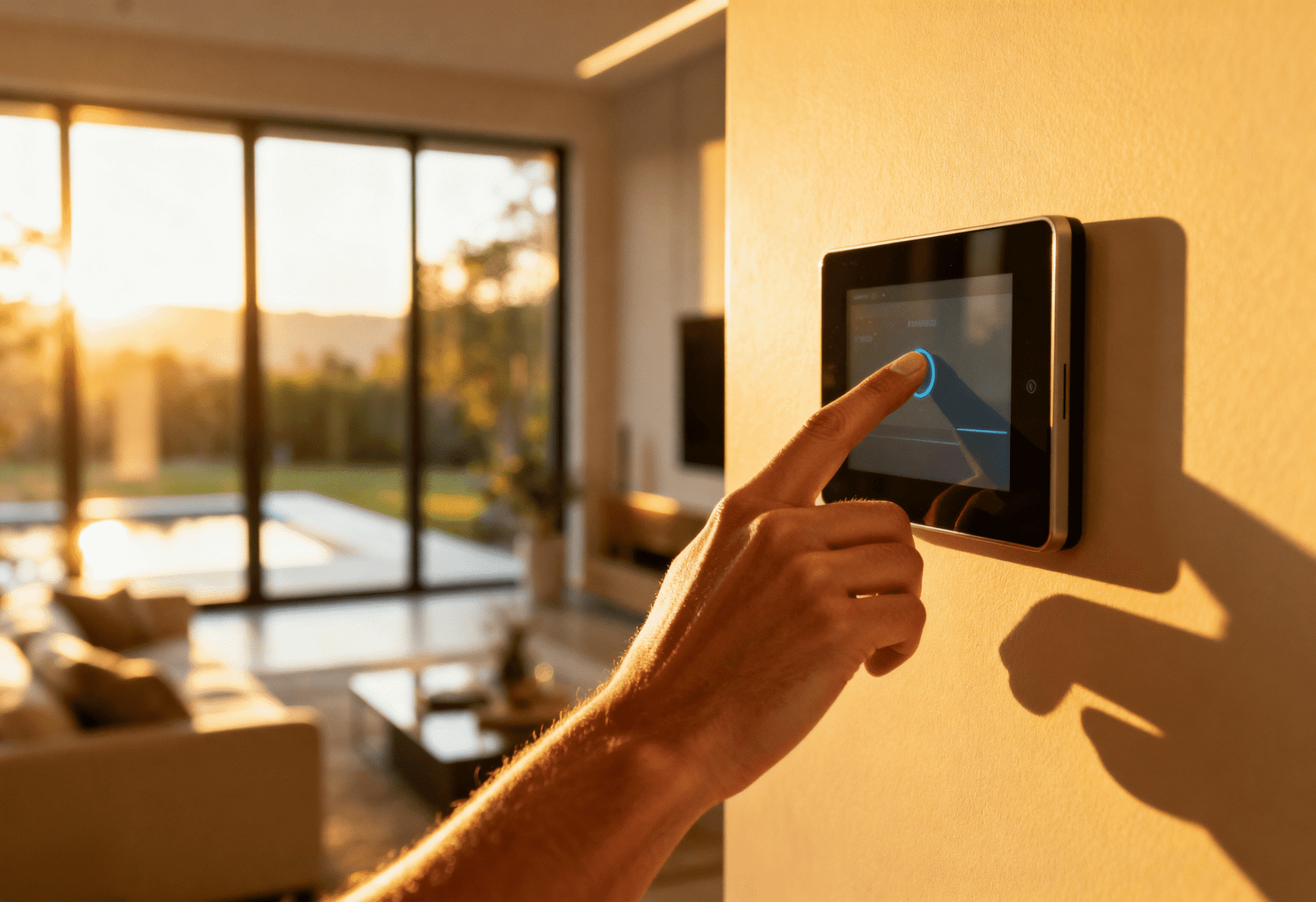
The Internet of Things (IoT) sector generated USD 1.6 billion in Brazil in 2024 and is projected to exceed USD 4.1 billion by 2030, according to Grand View Research. Within this landscape, the Brazilian smart home market stands out, revealing that consumers today view it as something that simplifies their daily lives.
“The connected home is becoming increasingly integrated into people’s routines. The real progress lies not just in connecting devices, but in having technology solve concrete everyday situations, delivering greater security, comfort, and cost savings,” says Guilherme de Farias, Smart Home Manager at Intelbras.
One of the turning points, explained by Wagner Moura, a manager at Ezviz, was the improvement in internet connectivity across the country. For the expert, there is no turning back, even though the market is currently competing to determine which technologies will lead the movement.
“Automation always stems from a need. In Brazil, the greatest need we see is for security cameras, even if the consumer doesn’t always realize this falls under the ‘smart home’ umbrella. Beyond that, consumers look for smart lighting components and voice assistants. Sometimes, a person owns an assistant but has nothing else automated,” Moura notes.
Julio Marquezine, Retail Director at TP-Link, observes that today’s consumers are seeking smart ecosystems, even if they aren’t familiar with the term itself. “New technologies like artificial intelligence are also making a strong impact, particularly in security cameras featuring detection for people, animals, and vehicles, and even facial recognition,” he reveals.
Legacy technologies combine with the latest innovations when it comes to smart ecosystems. One example, says Marquezine, is infrared technology long a staple of remote controls which is essential for the operation of the H110 universal remote-control hub. This product not only manages other smart devices but also transforms any electronic device (operated by a remote control) into a smart device.
This integration centralizes control over various devices and enables the creation of scenes tailored to daily routines. “A common example is that classic worry when leaving the house: ‘Did I leave the lights or the air conditioner on?’ Automation solves this with a single ‘away’ command. Another example is traveling with the peace of mind that comes from monitoring your home remotely via an app or using smart switches to simulate occupancy by turning lights on and off at scheduled times,” says Farias.
INDUSTRY CHALLENGES
Although some bottlenecks have been resolved, a market challenge remains, Brazilians lack a strong “do-it-yourself” culture, largely because professional services used to be very inexpensive. However, according to Moura, such services are becoming scarcer and more costly. Consequently, it is important to professionalize installers while helping end-users realize that given the simplicity of these systems, they can handle many tasks themselves.
Furthermore, the Intelbras specialist adds, users often do not realize which of their daily needs can already be met by these technologies. It is hard to imagine someone who has experienced using a smart lock ever going back to a traditional key. The smart home market is accelerating rapidly, yet there is still significant work to be done to educate consumers about the real benefits of these products.
NEXT STEPS
There is a consensus that Artificial Intelligence will play a leading role in the connected home of the near future. The Ezviz executive illustrates this by pointing to China, where devices placed inside refrigerators track items entering and leaving, thereby generating an inventory and a shopping list for the user.
According to Farias, interaction with technology is set to become increasingly simple and intuitive, with AI and voice commands further streamlining automation. The most significant step, however, is for the home itself to recognize the residents’ behavioral patterns and suggest automations before they even think of configuring them thereby reducing repetitive tasks and decisions while making homes safer, more digital, and more efficient.
“The connected home will become virtually invisible, in the sense that the experience will feel more natural. It is similar to the evolution of the internet; it once required complex setup procedures involving a telephone line just to get online. Today, the internet simply works, we don’t think about ‘getting on the internet’ because we are already there. I believe that in the very near future, smart home will rely less on apps and focus more on voice commands, presence detection, and pre-automated actions,” adds the TP-Link executive.