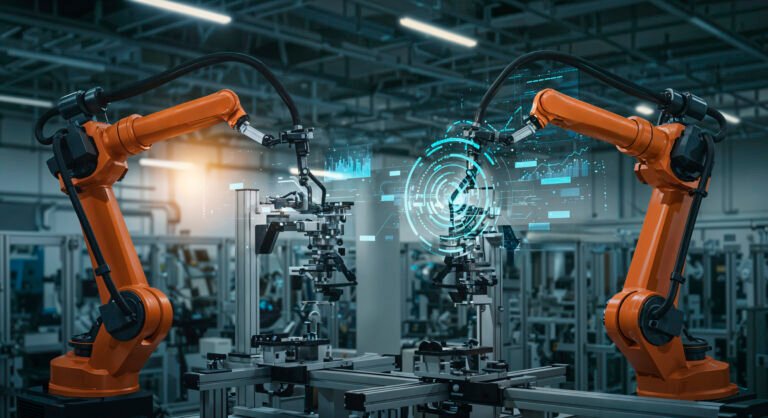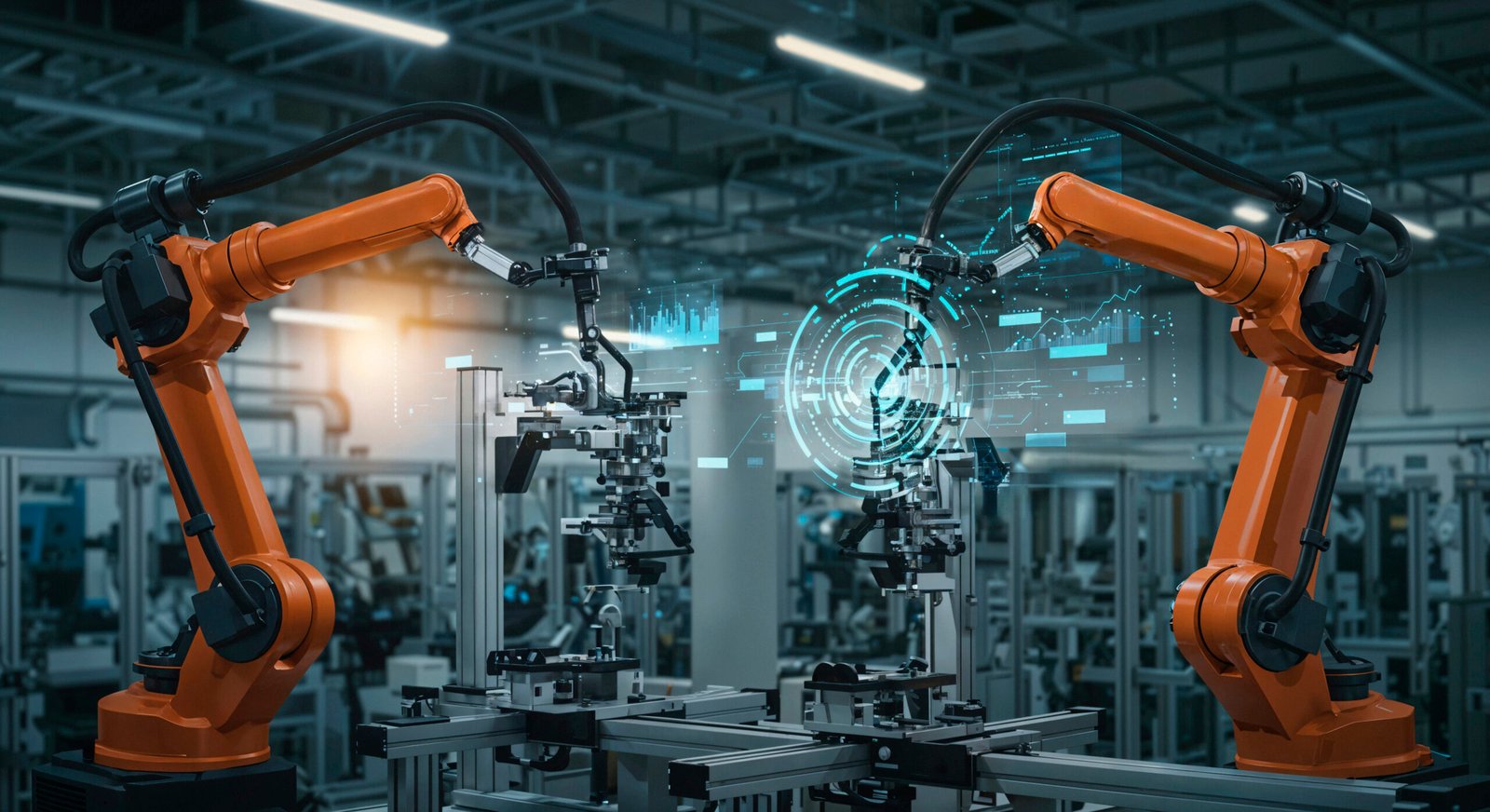
Before reducing waste, one must know where it exists. In the industrial sector, this answer is becoming clearer as machines, sensors, and systems generate and cross-reference operational data. It is in this environment that artificial intelligence is gaining ground, helping to identify deviations, anticipate issues, and improve resource utilization.
“Industrial automation is the backbone of factories today. It has evolved from a purely control-oriented role to one that also encompasses diagnostics,” says Robson dos Santos, Business Development Manager for AI, Data, and Connectivity at Siemens Brazil.
However, achieving this result depends on connectivity. “Today, a manufacturing facility requires extensive connectivity, sensing capabilities, and integration between the factory floor and IT environments to understand what is happening within the process,” the specialist explains.
At Electrolux, AI is already part of this monitoring process. The company tracks 600 operational indicators in real time, relaying the information to manufacturing teams. Furthermore, the company collects data from all factory-floor processes to optimize operations using generative AI and employs smart sensors to prevent equipment failures.
“Sensors installed on machines use AI to generate predictive analyses of failure modes and detect potential faults before they occur,” states Ramez Chamma, COO of Electrolux Group Latin America.
Cross-referencing real-time factory indicators with analysis performed by AI agents accelerates decision-making to prevent deviations and waste, while also contributing to improved quality and increased productivity.
THE DATA BEHIND AI
The Siemens specialist explains that industrial AI works with a different type of information than the applications most familiar to consumers. Motors, robots, solar panels, and other equipment provide operational data that feeds models specifically designed for industry.
“Industrial AI is somewhat different from everyday AI because it consumes a different type of information. These are distinct data models known as ‘industrial foundation models,’” he notes.
Technology, however, does not solve factory problems alone. The gain appears when these models are fed by process information and combined with other technologies.
This is precisely where one of the main challenges of Brazilian industry still lies. Many factories have machines and processes that are not connected. “We have isolated processes, machines that are not connected, information that is not enough for AI to work”, says Santos.
The executive also points out the lack of trained professionals and the need for investment to modernize manufacturing parks. “There is a huge gap in training and professionalism in the industry. There is a lack of intellectual and human resources that understand technology to be within a company.”
On the industry side, says Chamma, the biggest challenge is balancing governance and corporate culture with business objectives.
“It is necessary to guarantee strict information security, data privacy and ethics structures, while stimulating innovation. The company deals with this by adopting high tolerance for error in initial tests but maintaining low tolerance for failure in critical processes”, he reveals.
THE NEXT MOVE
Connectivity and artificial intelligence must advance together. To this end, Santos cites technologies such as industrial 5G, wireless applications and agentic AI among the fronts that should gain ground in the coming years.
Electrolux also expects AI to become increasingly integrated into industry activities. “The trend for the coming years is the consolidation of AI in an invisible and natural way in the industry’s daily life”, says Chamma. The company’s expectation is that 80% of corporate software will have AI embedded by the end of 2026.
Evolution, however, should not start with technology for technology’s sake. “AI does not bring many benefits in isolation. It needs to be alongside other technologies, to be fed with information. Technology suppliers need to be increasingly capable of taking a holistic view and not of a specific product”, argues Santos.
When this pain is due to wasted energy, the use of raw materials, inefficient processes or an operation that needs more predictability, data helps show where the problem is. And technology becomes a tool to act on it.